How Medical Qigong and Acupuncture Can Support Your Healing Journey
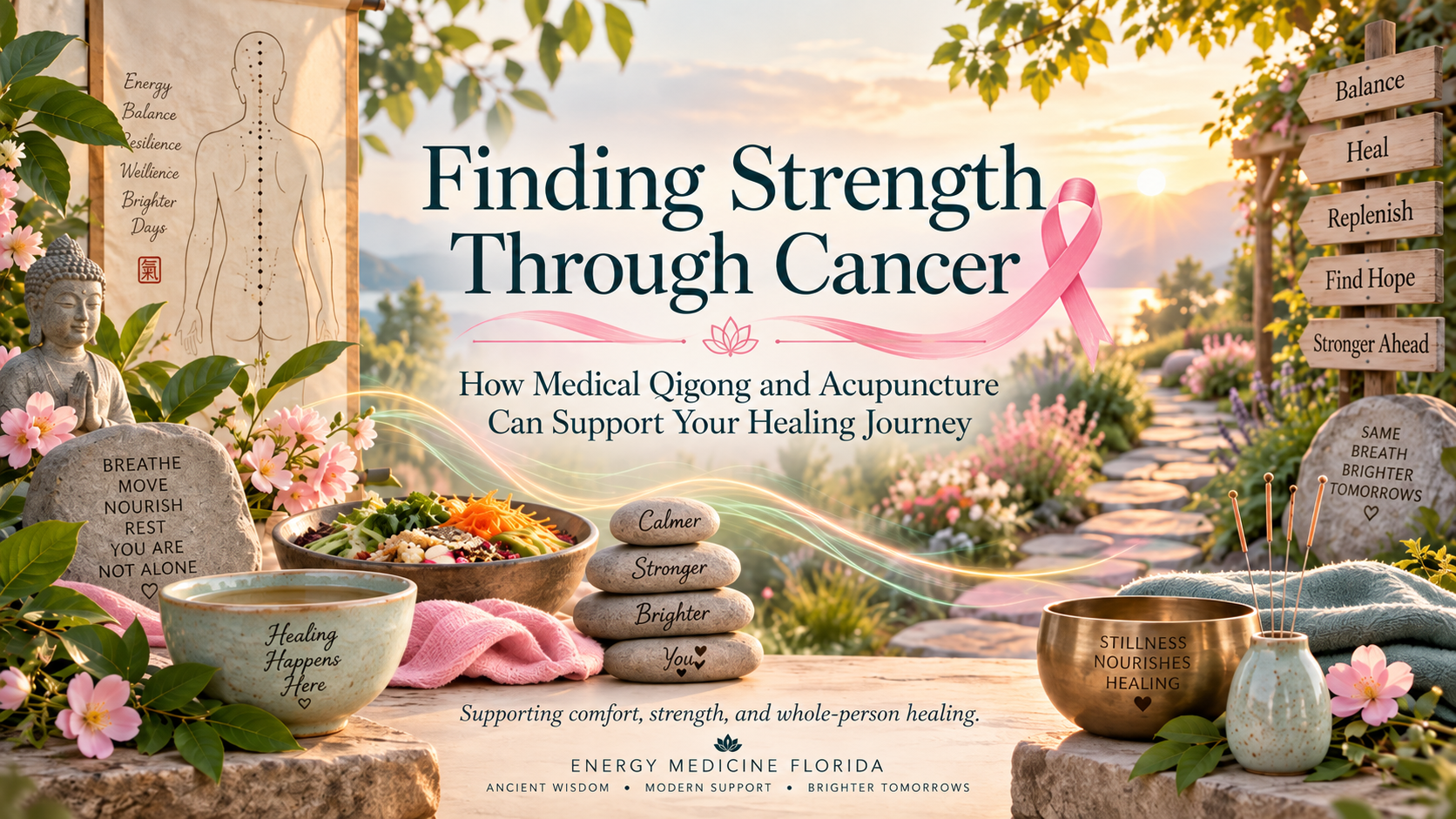
A cancer diagnosis can affect every part of your life. It can change how you sleep, eat, move, think, and feel. Along with physical symptoms, it may bring fear, exhaustion, pain, uncertainty, and a feeling that you have lost control of your own body.
This is why I believe good cancer care must address more than the disease. It must also support the person living with it.
Surgery, chemotherapy, radiation, immunotherapy, and other treatments recommended by an oncologist can be lifesaving. Medical Qigong and acupuncture are not replacements for this care. They are complementary practices that help support the body and mind throughout treatment and recovery.
Medical Qigong Gives You Tools to Support Yourself
During cancer treatment, it is easy to feel that everything is being done to you. Medical Qigong offers prescriptive exercises that give you an opportunity to participate actively in your own care.
From a traditional Chinese medicine perspective, these exercises are chosen to help address patterns of imbalance within the body. Medical Qigong also recognizes the mental and emotional strain of cancer and the effects that stress and difficult life experiences can have on a person’s overall well-being.
Qigong combines gentle movement, posture, breathing, focused attention, and relaxation. It does not have to be physically demanding.
A patient can practice standing movements or gentle walking. When standing is difficult, the practice may consist of seated breathing, simple arm movements, meditation, or visualization. Some of these methods draw from ancient Daoist and Buddhist traditions that have been practiced for centuries.
Qigong can assist in curing cancer and helping to lessen or element many symptoms. Studies suggest that it reduced pain while improving the quality of life.
If you or a loved one feels depleted, Qigong and traditional Chinese medicine may offer a gentle way to begin restoring a sense of energy. In Chinese medicine, we describe this as cultivating and circulating Qi.
The goal is never to force the body or push through exhaustion. The practice is adapted to the patient’s strength, symptoms, treatment schedule, and the precautions provided by the oncology team.
Acupuncture for Pain and Other Symptoms
Pain may come from the cancer itself, surgery, scar tissue, restricted movement, or the effects of treatment.
Acupuncture may be helpful for certain kinds of cancer-related pain. It may also support patients experiencing nausea, fatigue, hot flashes, dry mouth, anxiety, sleep problems, or some forms of neuropathy.
Acupuncture can help: Low blood counts, blood-thinning medications, lymphedema risk, surgical areas, treatment ports, skin affected by radiation, bone metastases, and infection.
Safe treatment means knowing not only where to place a needle, but also when not to needle.
Nutrition and Emotional Balance
There is no single food, herb, supplement, or diet that cures every cancer. Nutrition should help the patient maintain strength; hydration, body weight, and the nutrients needed during treatment and recovery.
From a Chinese medicine perspective, food is part of the daily cultivation of Qi. The best choices depend on the individual’s digestion, constitution, symptoms, and medical treatment.
Food should nourish the patient—not become another source of guilt, fear, or restrictive rules. Herbs and concentrated supplements should always be discussed with the oncology team because some may interact with cancer treatments or other medications.
The emotional state also deserves attention. Fear, grief, anger, sadness, and frustration are natural responses to cancer. Chinese medicine addresses all of these emotions
Qigong breathing, meditation, counseling, support groups, spiritual practice, and honest conversation may help a person find greater peace of mind. Emotional support does not mean that cancer was caused by negative thinking. Cancer is not a moral, emotional, or spiritual failure.
Peace of mind does not mean pretending everything is fine. It means finding a steadier place from which to meet what is happening.
Working Together
.
Medical Qigong encourages movement, breathing, calm, and self-awareness. Acupuncture may help manage selected symptoms. Good nutrition supports the body. Emotional care helps the patient remain connected to hope, meaning, and inner strength.
By helping some patients lessen pain, fatigue, stress, and other treatment-related burdens, these complementary practices may make the experience more tolerable and help patients remain actively involved in their care.
Taking an active role in your health does not mean blaming yourself for becoming ill. It means asking questions, understanding your options, communicating with your healthcare team, and using appropriate supportive practices to care for yourself throughout the journey.
If you are living with cancer, preparing for treatment, or recovering afterward, I invite you to explore whether Medical Qigong and acupuncture may be appropriate for you.
I am accepting new patients at Energy Medicine Florida. Each program is adapted to the individual and designed to support all aspects of your recovery.
To learn more or schedule an appointment, visit EnergyMedicineFlorida.com or call or text 305-407-0120.
Care begins with listening to the whole person.
