

Breast Cancer Treatment: What Can You Do to Help Your Body Through It?
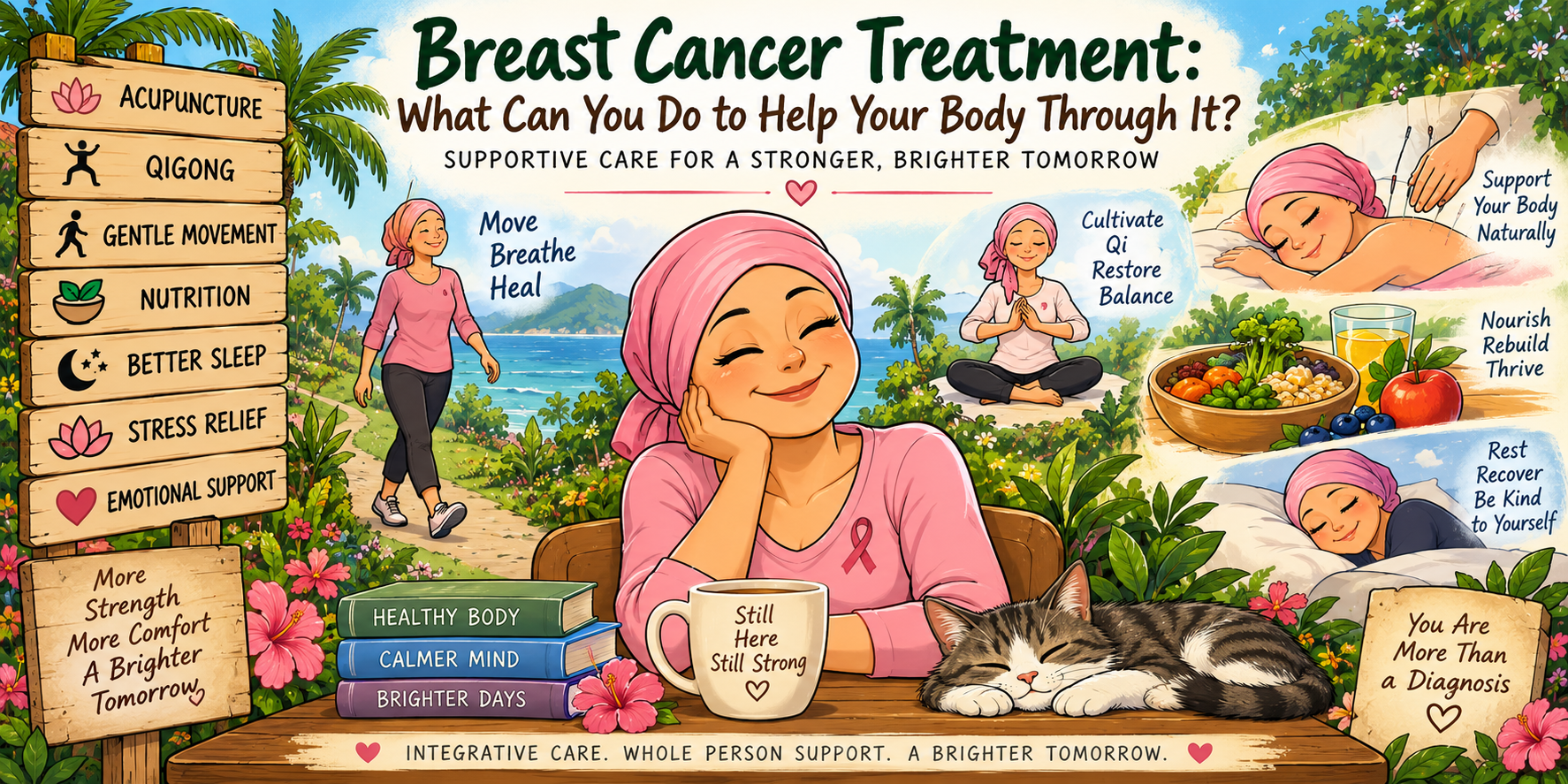
If you or someone you love is going through breast cancer treatment, do not wait until treatment is over to ask what can be done to preserve strength, manage fatigue and pain, maintain mobility, and support recovery.
Cancer treatment can place tremendous demands on the body and mind. Surgery, chemotherapy, radiation therapy, immunotherapy, and hormone therapy may all be essential parts of treating breast cancer. At the same time, these treatments may affect energy, sleep, appetite, mood, strength, and the ability to move comfortably.
This is where supportive integrative care may have an important role.
There is a clear distinction between treating cancer and supporting the person receiving treatment:
Standard oncology treatment targets the cancer.
Integrative care supports the person going through that treatment.
These approaches do not have to compete. When they are used responsibly and coordinated with the oncology team, they can work together.
Treating the Whole Person During Cancer Care
When someone is diagnosed with breast cancer, much of the attention naturally goes toward the tumor: What type is it? Has it spread? What treatment is recommended? When will treatment begin?
These questions are necessary, but there is another question that deserves attention:
How can we treat the cancer while helping the person remain as strong, functional, and emotionally grounded as possible?
The patient is more than a diagnosis. She is a whole person with a nervous system, muscles, joints, emotions, relationships, responsibilities, and a life she wants to continue living.
Supportive care may include physical therapy, exercise, nutritional guidance, psychological support, pain management, acupuncture, Qigong, meditation, breathing practices, and help with sleep. The right combination will be different for every patient and may change throughout treatment.
The purpose is not to promise a cure or interfere with oncology. The purpose is to help the patient manage symptoms, preserve function, and participate as fully as possible in treatment and recovery.
Cancer-Related Fatigue Is More Than Ordinary Tiredness
Cancer-related fatigue can feel very different from the tiredness that follows a busy day. It may not disappear after a good night of sleep. A person can wake up exhausted, feel weak after a small task, or lose the motivation to move because everything requires more effort.
Fatigue may have several contributing causes, including treatment itself, pain, disrupted sleep, anemia, reduced activity, emotional stress, poor nutrition, or other medical problems. New or worsening fatigue should therefore be discussed with the oncology team rather than automatically attributed to cancer treatment.
At the same time, complete inactivity can sometimes lead to further weakness and loss of confidence. For many patients, carefully chosen movement can be helpful. The American Cancer Society states that physical activity is safe and beneficial for most people before, during, and after cancer treatment, although the plan should be adapted to the person's condition and approved by the treatment team.
The goal is not to push through exhaustion. It is to find a safe level of activity that the body can tolerate and build gradually from there.
That may begin with a few minutes of walking, gentle stretching, simple balance exercises, or slow coordinated movements. On difficult days, several brief periods of movement may be more realistic than one longer session.
How Qigong May Help
Qigong combines gentle movement, posture, breathing, attention, and relaxation. It can usually be modified for people who are standing, seated, weak, or recovering from surgery.
Research involving breast cancer survivors suggests that Qigong and related meditative movement practices may help reduce cancer-related fatigue. Some studies have also reported improvements in sleep, mood, and quality of life, although the research is still developing and results are not identical across every study.
Qigong should therefore be understood as supportive care—not as a treatment for the cancer itself.
One of its practical benefits is adaptability. A person may practice for only a few minutes, use a chair for support, limit the range of arm movement, or focus mainly on breathing and relaxation. This makes it possible to meet the body where it is instead of forcing it to perform at its former level.
A gentle practice may help a patient reconnect with her body at a time when the body can feel unfamiliar or frightening. Slow breathing and mindful movement may also create a sense of participation: the person is not merely waiting for the next appointment but is taking a safe, active role in caring for herself.
Qigong must still be individualized. Someone who recently had breast or lymph-node surgery, has lymphedema or restricted shoulder movement, is unsteady, has bone metastases, or is experiencing significant weakness may need specific medical or rehabilitation guidance before beginning.
Acupuncture and Aromatase-Inhibitor Joint Pain
One of the clearest examples of evidence-based integrative support involves joint pain associated with aromatase inhibitors.
Aromatase inhibitors are hormone therapies commonly used for hormone-receptor-positive breast cancer. They can be an important part of reducing the risk of recurrence, but some patients develop stiffness or pain in the hands, wrists, knees, hips, or other joints. The discomfort may interfere with sleep, exercise, work, and ordinary daily activities. For some women, it becomes difficult to continue taking the medication.
A large randomized clinical trial published in JAMA found that acupuncture produced greater reductions in aromatase-inhibitor-related joint pain than sham acupuncture or a wait-list control. A joint guideline from the Society for Integrative Oncology and the American Society of Clinical Oncology recommends acupuncture for this type of pain.
This distinction is important:
Acupuncture is not treating the breast cancer.
It is being used to help manage a side effect of treatment.
If pain can be reduced, a patient may be able to sleep better, move more comfortably, stay active, and discuss treatment decisions with her oncologist from a stronger position.
Patients should not stop hormone therapy or change the dose on their own. Joint pain should be reported to the prescribing oncologist, who can evaluate other possible causes and discuss the appropriate options.
Acupuncture during cancer treatment should be provided by a properly licensed practitioner who understands oncology-related precautions. The practitioner should know about recent surgery, lymph-node removal, lymphedema risk, radiation areas, implanted devices, medications, low blood counts, infection risk, and any areas of fragile or damaged skin. In some circumstances, treatment may need to be modified, postponed, or cleared by the oncologist.
Gentle Movement Helps Protect Function
Strength and mobility can decline when pain and fatigue lead to long periods of inactivity. This does not mean every patient needs a strenuous exercise program. It means that safe movement deserves to be considered part of supportive care.
Depending on the patient's condition and medical guidance, helpful movement may include:
Short walks
Gentle Qigong
Breathing coordinated with movement
Light stretching
Balance practice near a stable support
Physical or occupational therapy exercises
Gradual shoulder and arm rehabilitation after surgery
The amount and type of movement must be individualized. A patient recovering from surgery will have different needs from someone receiving radiation, living with neuropathy, or managing metastatic disease.
The best question is not, “How much should every cancer patient exercise?” It is, “What movement is safe and useful for this individual today?”
Sleep, Stress, and Emotional Well-Being
Treatment can disrupt sleep for many reasons: pain, medication effects, hot flashes, anxiety, changes in routine, or fear about the future. Poor sleep can then worsen fatigue, pain sensitivity, mood, and concentration.
Simple supportive practices may help calm the nervous system. These can include slow breathing, guided relaxation, meditation, gentle evening Qigong, counseling, and a regular sleep routine. Persistent insomnia, severe anxiety, depression, panic, or emotional distress should be discussed with the healthcare team. Psycho-oncology, counseling, support groups, and medication can be valuable parts of comprehensive care.
Emotional support is not a luxury. It is part of caring for the whole person.
Nutrition and Hydration Require Individual Guidance
Good nutrition can help the body maintain energy, tissue repair, muscle, and general resilience. However, cancer treatment may affect appetite, taste, digestion, swallowing, or the ability to tolerate certain foods.
There is no single “cancer diet” that is appropriate for everyone. A registered dietitian with oncology experience can help a patient adapt food and hydration to her treatment, symptoms, weight changes, laboratory results, and other medical conditions.
Herbs and supplements also deserve caution. “Natural” does not automatically mean safe during cancer treatment. Some products can interact with medicines, affect bleeding, or interfere with the way certain treatments work. Patients should give their oncology team a complete list of supplements, herbs, teas, and complementary therapies they use or are considering.
Questions to Ask Your Healthcare Team
If you are going through breast cancer treatment, consider asking:
What can I safely do to maintain my strength and mobility?
Is my fatigue expected, or should I be evaluated for another cause?
What options are available to help manage my pain?
Would physical therapy or occupational therapy be helpful?
Is acupuncture appropriate for my symptoms and medical condition?
Can I safely practice Qigong or another form of gentle exercise?
Are there movements I should temporarily avoid after surgery or radiation?
Should I meet with an oncology dietitian?
Could any of my herbs or supplements interact with treatment?
What support is available for sleep, anxiety, or emotional distress?
These questions help turn supportive care into a coordinated part of the treatment plan.
Start Where You Are
You do not have to wait until cancer treatment is finished to begin caring for your strength, mobility, sleep, and emotional well-being.
Start where you are.
Do what your body can safely handle.
Build gradually.
Pay attention to how you respond.
Keep your oncology team informed.
Some days, progress may mean taking a short walk. On another day, it may mean completing a few gentle Qigong movements, receiving approved supportive treatment, eating a nourishing meal, or allowing the body to rest.
Recovery is not always a straight line. The goal is to respond to the body with patience and wisdom while remaining connected to appropriate medical care.
The goal is not simply to get through cancer treatment.
The goal is to come through it with as much strength, function, confidence, and quality of life as possible.
Your oncology team is treating the cancer. You can also take an active role in caring for the person going through the treatment—you.
If you or someone you love is going through breast cancer treatment and would like to learn more about supportive integrative care, call or text me at 305-407-0120. I will get back to you as soon as possible.
Integrative care should always be coordinated with your oncology team. It is intended to support comfort and function and is not a replacement for conventional cancer treatment.
--
Sherwood S Swartz AP, MMQ, DMQ, DOM.
AKA Dr. Wu Dhi
