The Five Elements: What Happens When We Feel Blocked in Life?
After many years of treating patients, teaching, and studying Chinese medicine, Medical Qigong, Taoism, and Buddhism, I have learned something important about the human condition.
We carry memories, emotions, beliefs, and patterns that can influence our health, relationships, and the way we experience life. Some patterns begin in childhood. Others may grow from grief, disappointment, fear, or experiences we thought we had put behind us.
Then something happens. It may be a difficult conversation, a loss, a change in health, or a moment that brings an old feeling back to the surface. Suddenly, we realize that something within us needs attention.
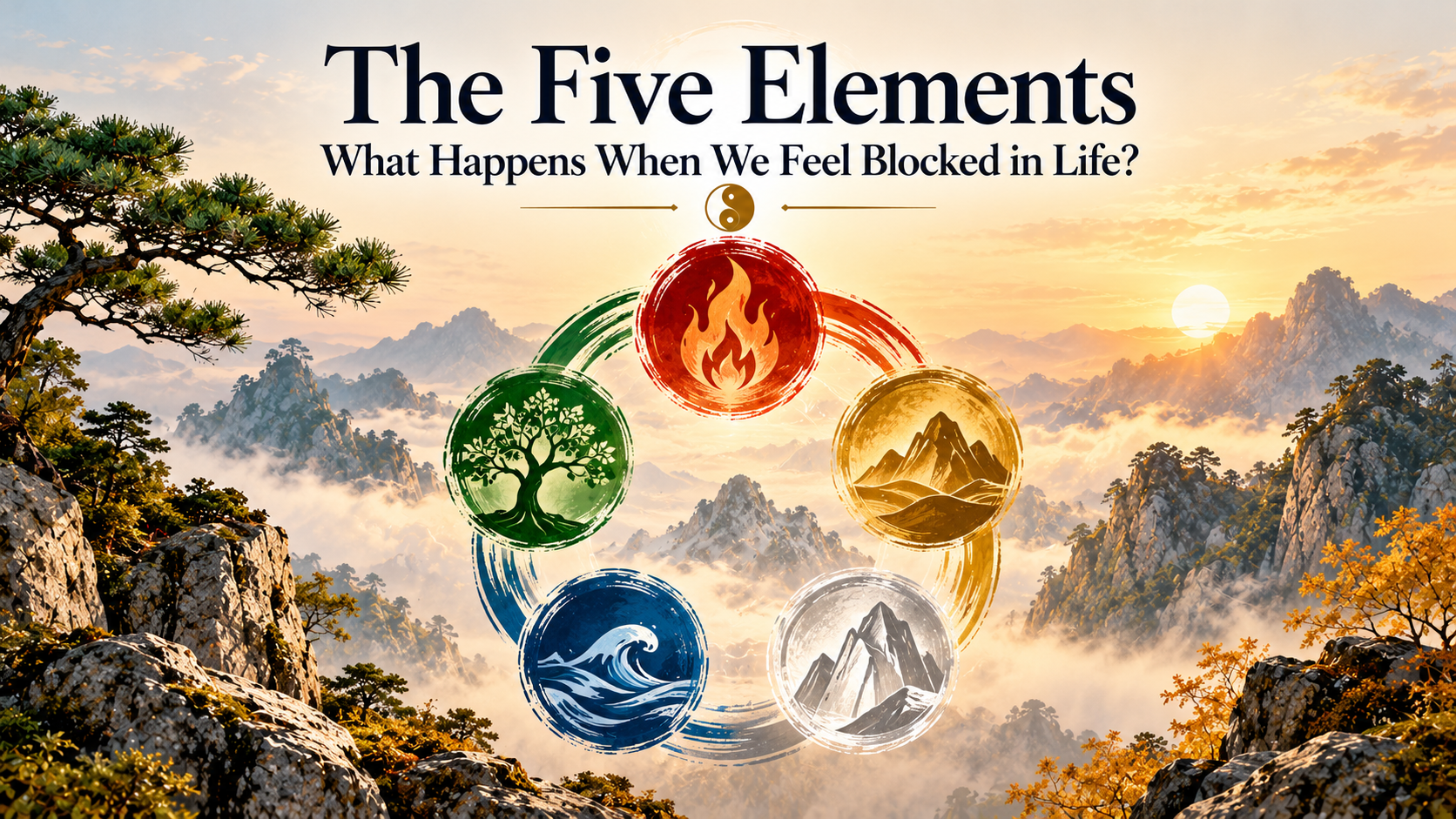
Chinese medicine offers one way to reflect on these patterns: the Five Elements. Wood, Fire, Earth, Metal, and Water describe different qualities of life and how they relate to one another. When we feel “blocked” in an element, that is a traditional Chinese medicine idea—not a medical diagnosis. It can still give us helpful questions to consider.
Wood: Liver and Gallbladder
Wood represents growth, flexibility, and vision. Like a tree reaching toward the light, Wood helps us imagine possibilities and move forward.
When we feel stuck or constrained, we may notice frustration, irritability, or resentment. We might ask ourselves: Where do I feel unable to move forward? What would help me become more flexible? The positive qualities associated with Wood include kindness, compassion, and the ability to see a way ahead.
Fire: Heart and Small Intestine
Fire represents warmth, joy, connection, and the Shen—the spirit or awareness traditionally associated with the Heart.
When Fire feels unsettled, we may feel restless, disconnected, or unable to fully experience joy. This invites us to ask: Am I making room for connection, quiet, and the things that bring meaning to my life? Small moments of genuine presence can help us reconnect with ourselves and others.
Earth: Spleen and Stomach
Earth represents nourishment, stability, and our ability to digest both food and life. It is associated with feeling grounded and supported.
When life feels overwhelming, worry and overthinking can take up more and more space. We may find it hard to concentrate or to feel steady. Earth asks us: What is nourishing me? What am I carrying that I could set down, even briefly? What would help me feel more present today?
Metal: Lungs and Large Intestine
Metal represents breath, integrity, boundaries, grief, and letting go. It reminds us that some experiences need to be honored, while others may be ready to release.
Sometimes we carry emotional burdens for years without realizing how much they affect us. Metal invites us to ask: What am I holding onto? What support would help me move through this? Is there a boundary I need to create so I can breathe more freely?
Water: Kidneys and Bladder
Water represents wisdom, willpower, and inner strength. It is associated with our ability to adapt, conserve our energy, and find steadiness through change.
When fear or insecurity keeps us from moving forward, Water asks us to look more closely: What would help me feel supported? What small step can I take, even if I do not have the whole path figured out?
These associations do not mean that an emotion or physical symptom proves that a particular element is out of balance. They are part of a traditional framework for reflection. Persistent or concerning physical or emotional symptoms deserve appropriate professional care.
From worry and blame to participation
My lifelong studies of Taoism and Buddhism have profoundly influenced my approach to healing. Buddhist teachings describe the Three Poisons as ignorance, attachment, and aversion—patterns that can keep us caught in worry, resentment, struggle, or blame.
Taoism offers another perspective: life is always changing, and we can learn to respond with greater awareness instead of resisting every change.
I encourage my patients to move from blame toward responsibility, from worry toward awareness, and from struggle toward meaningful participation in life. We cannot always change what happened in the past, but we can begin to change how we respond to it.
For me, healing is more than addressing physical symptoms. It is also an opportunity to recognize old patterns and discover new possibilities. Perhaps the question is not only, “How do I get better?” but also, “How well can I be, and what can I contribute to life?”
I welcome new patients interested in acupuncture, Medical Qigong, and a holistic approach to well-being.
Dr. Wu Dhi
Schedule a consultation
305-407-0120
--
Sherwood S Swartz AP, MMQ, DMQ, DOM.
AKA Dr. Wu Dhi
