The Hun and the Liver: Sleep, Vision, and Emotional Balance
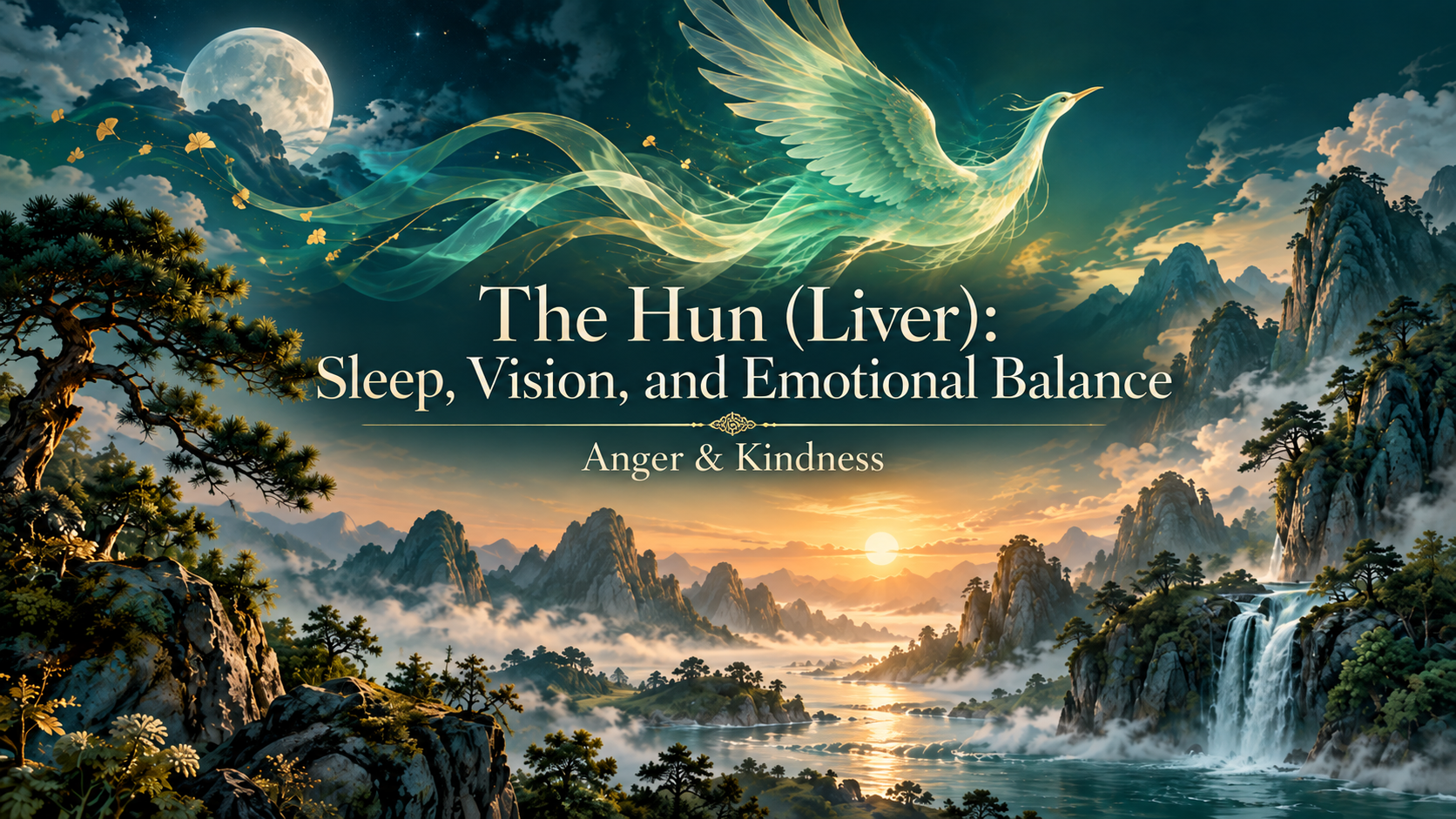
Understanding the Spirit of the Liver and Its Role in Chinese Medicine
In traditional Chinese medicine, we recognize that our physical health, emotional well-being, and spiritual nature are deeply interconnected. One of the most fascinating aspects of this understanding is the concept of the Five Spirits, each associated with a different organ system and aspect of our inner life.
The Hun, often referred to as the Ethereal Soul, is the spirit associated with the Liver and the Wood element. It is traditionally connected with dreaming, imagination, creativity, inner vision, planning, and our ability to move forward in life.
I like to think of the Hun as the part of ourselves that allows us to see beyond our present circumstances. It helps us imagine possibilities, establish direction, and recognize opportunities for personal growth.
But what happens when we lose that direction? What happens when our emotions become unsettled, our sleep is disturbed, or we no longer feel connected to our purpose?
In Chinese medicine, these experiences invite us to look more closely at the relationship between the Liver and the Hun.
The Hun, Sleep, and Dreaming
One of the traditional functions of the Hun is its relationship with sleep and dreaming.
Classical Chinese medicine describes the Hun as being anchored by the Blood of the Liver. During restful sleep, the Hun is said to return to the Liver, allowing the mind and spirit to settle.
When the Liver is disturbed or its Blood is considered insufficient, the Hun may become restless. Traditional descriptions sometimes refer to the Hun as wandering, suggesting a state in which a person's inner awareness is unsettled or lacks a sense of grounding.
This may be reflected in experiences such as difficulty falling asleep, frequent waking, vivid or excessive dreaming, or waking without feeling refreshed.
Some people experience the opposite pattern, sleeping excessively while still feeling emotionally or physically depleted.
Of course, disturbed sleep can arise from many medical, psychological, and lifestyle factors. The traditional concept of the Hun provides one perspective rather than a medical diagnosis.
What I find particularly interesting is the relationship between dreaming at night and having a vision for our lives during the day.
Our dreams may reflect our concerns, desires, memories, and emotional experiences. During our waking hours, imagination allows us to envision a future that does not yet exist.
In this sense, the Hun is associated not only with the dreams we experience while sleeping but also with the dreams we hope to fulfill in life.
The Liver and Our Emotional Lives
In Chinese medicine, the Liver is traditionally responsible for maintaining the smooth movement of Qi throughout the body.
The Liver belongs to the Wood element, which is associated with growth, flexibility, movement, and the arrival of spring.
Consider a young tree growing toward the sunlight. Its branches reach outward, adapting to the environment while continuing to develop.
This is a beautiful representation of healthy Wood energy.
When we feel emotionally balanced, we may find it easier to adapt to challenges, express our feelings appropriately, make decisions, and move forward with confidence.
When this balance becomes disturbed, traditional Chinese medicine may associate the pattern with frustration, irritability, anger, repressed emotions, or difficulty adjusting to change.
Some people may feel emotionally overwhelmed, while others withdraw, lose motivation, or struggle to envision a meaningful future.
Emotional stress may also accompany digestive discomfort, muscular tension, or changes in sleep.
Chinese medicine also associates the Liver with the eyes and the capacity for clear vision. This includes physical sight within the traditional system, but it also provides a meaningful metaphor for our ability to see where we are going in life.
However, persistent visual changes, depression, insomnia, or digestive symptoms should be medically evaluated rather than assumed to reflect a Liver imbalance.
When We Lose Our Inner Vision
Over my many years of practicing acupuncture and Medical Qigong, I have worked with people who feel stuck in their lives.
Sometimes they are dealing with chronic pain or illness. Others are struggling with difficult relationships, emotional stress, or major life changes.
They may feel that they have lost their direction.
Their thoughts return repeatedly to the same worries, frustrations, or disappointments. Instead of looking toward the future, they become consumed by what has happened in the past.
This is where I find the traditional teachings of the Hun especially meaningful.
The Hun represents our capacity for imagination, creativity, and movement toward new possibilities.
When we become overwhelmed by emotional difficulties, it can be challenging to recognize those possibilities.
But sometimes a shift begins when we allow ourselves to become quiet, release some of the tension we are carrying, and consider another way forward.
We cannot always control what happens in our lives, but we can work toward changing how we respond to those experiences.
This does not mean denying our emotions or pretending that difficult circumstances do not exist.
It means learning to recognize our feelings without allowing them to determine every decision we make.
Cultivating the Hun Through Acupuncture and Medical Qigong
When someone comes to my office experiencing emotional stress, restless sleep, or a feeling of being disconnected from themselves, I do not look at one symptom in isolation.
I consider the whole person.
How are they sleeping? How is their digestion? Are they experiencing muscular tension, chronic pain, or fatigue? What is happening emotionally in their lives?
Within Chinese medicine, acupuncture points are selected according to an individual's overall pattern rather than simply treating a single complaint.
Acupuncture may be used as part of a supportive approach to relaxation, pain management, and certain sleep-related concerns.
Medical Qigong adds another dimension to this work.
Through gentle movement, natural breathing, visualization, and focused awareness, we can cultivate greater sensitivity to our bodies and emotions.
I often encourage patients to recognize that emotions themselves are not the enemy.
Anger, sadness, frustration, and fear are all part of being human.
The challenge is learning how to experience these emotions without becoming overwhelmed by them.
In the traditional language of Chinese medicine, we seek to encourage the smooth movement of Qi and cultivate a more harmonious relationship between the body, emotions, and spirit.
These practices can complement appropriate medical or mental health care, rather than replace it.
Simple Ways to Nourish the Hun
There are several practices you can begin incorporating into your daily life.
Practice gentle Qigong. Slow, flowing movements combined with natural breathing can help encourage relaxation, body awareness, and a greater sense of grounding.
Create a peaceful evening routine. Reduce unnecessary stimulation before bedtime. Allow yourself time to unwind and prepare for restful sleep.
Spend time in nature. The Wood element reminds us of growth and flexibility. Walking among trees, gardening, or simply spending time outdoors can offer an opportunity to reconnect with the natural world.
Express your emotions. Writing, speaking with someone you trust, or engaging in creative activities may help you understand feelings that have been difficult to express.
Reflect on your direction in life. Ask yourself whether your daily activities are bringing you closer to the life you want to create.
Sometimes the smallest changes in our routines can help us develop a greater sense of clarity and purpose.
The Hun and the Art of Moving Forward
One of the teachings I appreciate most about the Hun is its connection with vision.
Not simply the ability to see with our eyes, but the ability to imagine what our lives might become.
There will always be periods when we feel uncertain, frustrated, or emotionally challenged.
But we do not have to remain permanently identified with those experiences.
The Wood element teaches us about growth and adaptability. A tree does not stop growing because the wind changes direction. It adjusts while continuing to reach toward the light.
In much the same way, we can learn to adapt to life's challenges while maintaining a connection to our deeper values and aspirations.
For me, cultivating the Hun means developing greater emotional awareness, allowing room for creativity, and maintaining a vision for the future without losing our connection to the present.
Our circumstances may change, but our capacity for personal growth can continue.
And sometimes the first step forward is simply becoming quiet enough to recognize the possibilities that are still available to us.
An Invitation to Restore Your Balance
If you are experiencing emotional stress, restless sleep, ongoing tension, or difficulty finding direction in your life, I invite you to explore how traditional Chinese medicine may complement your overall health and wellness.
At Energy Medicine Florida, I work with patients through individualized acupuncture, Medical Qigong, and supportive approaches intended to encourage relaxation, emotional balance, and greater awareness of the mind-body connection.
My approach considers the whole person, recognizing that our physical condition, emotional experiences, and sense of well-being are interconnected.
I am currently accepting new patients and welcome those interested in exploring a more integrative approach to their health.
Visit energymedicineflorida.com or call 305-407-0120 to schedule a consultation.
Sherwood S. Swartz, AP, MMQ, DMQ, DOM
Also known as Dr. Wu Dhi
Energy Medicine Florida
